How Liverpool Regeneration Affects Actual Prices? Before and After Comparison

By Ethan Wu, Senior Marketing Executive
9 September 2026 · 7 min read
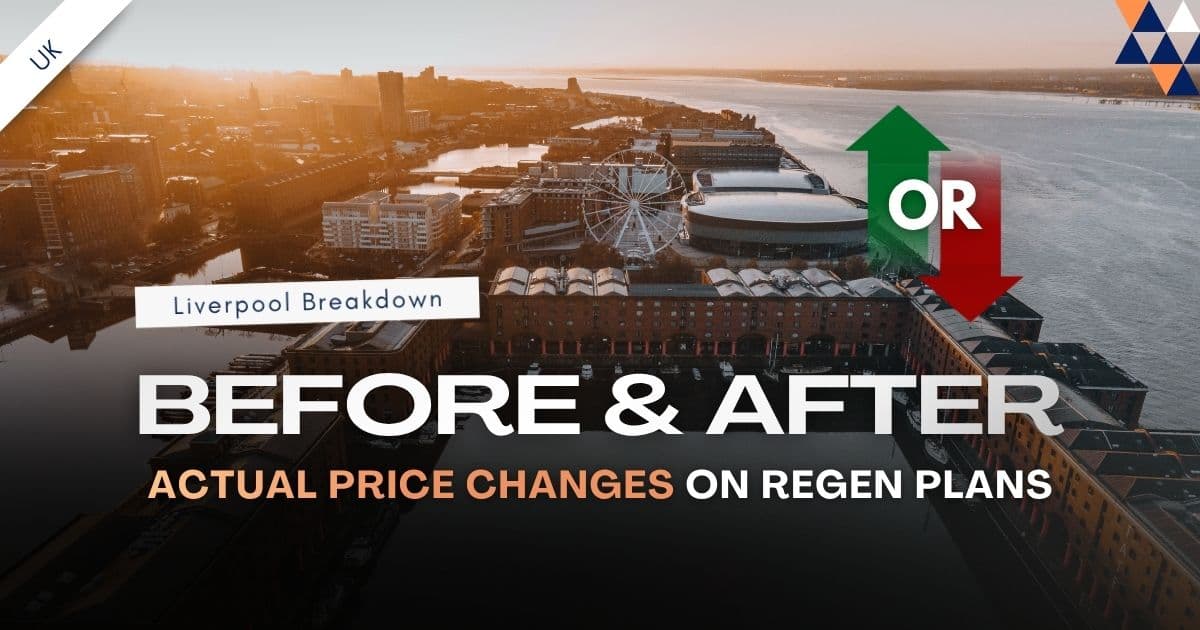
Liverpool regeneration has drawn more than a decade of billions in investment, and the money is now visibly in the ground: a completed £750m stadium, thousands of occupied waterfront homes, and an expanding science district. Most investors still reach for Manchester or Birmingham first, rarely Liverpool. So the question worth asking is simple: did all that Liverpool regeneration actually move house prices, and is there room left to run?
Key Takeaways
- 7.2% Annual Growth: Liverpool prices rose to an average £185,000 in June 2026, outpacing the wider North West's 4.7%, a signal regeneration is feeding through.
- Lowest Core-City Entry: At a £165,000 median, Liverpool is the cheapest entry point of any English core city, keeping yields high and deposits low.
- £5.5bn Waterfront: Liverpool Waters alone is a 60-hectare, 20-year scheme with roughly £1bn already under construction, anchoring long-term demand.
- Regeneration Is Built, Not Promised: The Everton stadium opened in February 2025, so investors are buying into delivery, not a masterplan on paper.
Jump to section:
The regeneration decade in numbers
Liverpool's headline number is its growth rate. The average house price hit £185,000 in June 2026, up 7.2% year on year, according to the ONS House Price Index. That comfortably beat the North West region's 4.7% over the same period, the kind of local outperformance you would expect where sustained investment is tightening supply and lifting an area's profile.
What makes that growth notable is the starting point. Liverpool's median sale price sits at around £165,000 on the latest HM Land Registry data, the lowest entry price of any English core city. For an investor, low entry plus above-region growth is the combination that keeps gross yields healthy while leaving headroom for capital appreciation.
Quick FAQ:
Q: Why does a low entry price matter so much for investors?
A: A lower purchase price means a smaller deposit and a higher rental yield for the same monthly rent. In Liverpool, the same rent that buys a 4% yield in a pricier city can deliver noticeably more, because the price at the bottom of the sum is smaller.
Get Our Weekly Property Market Update
Rothmore sends fresh UK property investment opportunities straight to your inbox: off-market deals, exclusive offers and access to new-launch projects. Be the first to know, every week.
Register for weekly updates here

Liverpool Waters: the £5.5bn waterfront
The clearest before-and-after story is the northern docks. Once derelict industrial waterfront, Liverpool Waters is now a 60-hectare, five-neighbourhood scheme spanning the River Mersey with a headline value of £5.5bn. According to the UK government, roughly £1bn of development is already under construction on site, nearly 1,200 homes are complete and occupied, and the Central Docks neighbourhood alone will add around 2,350 new homes, 20% of them affordable. This is a 20-year plan, which matters, because it caps how fast supply can arrive and underpins demand for a long hold.
Bramley-Moore Dock: regeneration you can stand in
The single biggest change to Liverpool's northern waterfront is Everton's new home. The Hill Dickinson Stadium at Bramley-Moore Dock, a roughly £750m, 52,769-capacity ground, opened in February 2025. For investors, an operational stadium is worth more than a rendered one. It brings match-day footfall, transport upgrades and hospitality demand to a district that, a decade ago, was closed-off dockland. That is the difference between betting on a promise and buying next to something already delivered.
Quick FAQ:
Q: Does a football stadium actually lift nearby property values?
A: Not on its own, but as an anchor for wider regeneration it can. The stadium's real value to investors is the infrastructure, footfall and confidence it draws into surrounding streets, which historically supports rental demand and redevelopment in the blocks around it.
Baltic Triangle and the Knowledge Quarter
Not every regeneration zone is about bricks and mortar. The Baltic Triangle turned a cluster of empty warehouses into the city's creative and digital district, and that tenant base, younger, professional and rental-first, is exactly what buy-to-let investors want near the city centre. Further east, the Knowledge Quarter's £1bn masterplan, including Paddington Village, is expanding Liverpool's science, health and university footprint. Student and graduate demand tends to follow that kind of institutional investment, which supports a deep, self-renewing rental pool.
Quick FAQ:
Q: Which Liverpool zone is best for a first-time investor?
A: It depends on your goal. City-centre and Baltic Triangle apartments suit yield-focused investors chasing young professional tenants, while waterfront schemes suit longer-term capital-growth holds. Matching the zone to your strategy matters more than chasing the newest launch.
So what does this mean for investors?
The before-and-after picture is consistent. Derelict docks and empty warehouses a decade ago, billions in delivered and in-progress investment today, and price growth now running ahead of the wider region. Liverpool's pitch is not that it is the cheapest place to buy. It is that it is the cheapest core city to buy into while regeneration is still visibly playing out. For investors priced out of the South or looking to diversify away from London yields, that combination is worth a serious look.
As always, the zone, the scheme and the exit strategy matter more than the postcode's reputation. The data supports the case; the right property is what turns it into a return.
Explore: The Forge, Liverpool
A new-build development in the Pumpfields regeneration zone on the edge of Liverpool Waters, The Forge offers 400 fully furnished apartments built for the city's growing renter base. It puts investors right inside the waterfront transformation this article describes.
Related Reading
The bigger picture matters, three related pieces:
- Best Place to Invest in Property UK: Why the North West Keeps Winning, the wider case for backing the North West over the South.
- Liverpool Central £5bn Regeneration Framework, the £5bn plan reshaping the city centre next door to these zones.
- Liverpool North Docks MDC: 17,000 Homes and a New Mayoral Zone, how the North Docks scheme is set to add 17,000 homes.
Fresh UK property market updates for investors: regeneration, yields, tax rules and monthly rental data, all in one hub. Read the latest here.

Frequently Asked Questions
Liverpool regeneration raises the questions investors most want answered: how much prices have moved, why the city stays cheap, and whether the big waterfront schemes are real. These answers cover the numbers, the major projects and what they mean for a buy-to-let strategy.
Liverpool's average house price reached £185,000 in June 2026, up 7.2% year on year according to the ONS, ahead of the North West region's 4.7% growth over the same period.
Ethan Wu
Senior Marketing Executive
Ethan is a Marketing Executive at Rothmore Property, bringing 4 years of experience spanning above-the-line marketing strategy, graphic design, and data-driven campaign analysis. Holding a Bachelor's degree in Marketing, Ethan oversees the full end-to-end marketing function at Rothmore — from market research and strategic planning through to creative production, campaign execution and performance reporting.
His analytical approach and design capability ensure every campaign is both visually compelling and grounded in measurable results, helping Rothmore maintain a consistent and impactful presence across all channels.
How can Rothmore Property help?
Whether you're an investor or a homeowner, Rothmore Property provides expert guidance, market insights, and tailored solutions to support your property purchase.


